
Luma AI
Image & DesignLuma AI is a 3D capture tool based on NeRF technology that can scan real-world objects or scenes into realistic 3D images for film, games, AR/VR, and other content production.
About
Overview
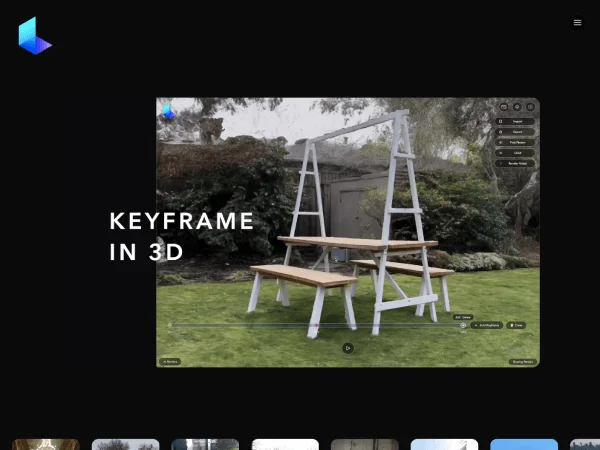
Luma AI is an AI tool for real-world 3D capture and digital content creation. It first gained attention for its NeRF (Neural Radiance Fields)-based 3D capture and reconstruction capabilities, which can scan real-world objects, products, or scenes into highly realistic 3D content. It is suitable for workflows such as film production, game development, AR/VR, virtual presentations, scene capture, and 3D modeling reference.
Based on the latest information from its official website, Luma AI is expanding from a single 3D capture tool into a creative AI platform covering images, video, audio, and text, emphasizing the use of AI Agents to assist with the creative process from concept to delivery. For users focused on 3D asset generation, real-scene digitization, and multimodal creative production, Luma AI remains a product worth following.
Main Features
-
Real-world 3D capture
- Can capture real-world objects, products, spaces, or scenes as 3D content
- Suitable for creating highly realistic digital assets and scene references
-
NeRF-based 3D reconstruction
- Uses neural radiance field technology to reproduce object details, reflections, lighting, and spatial depth
- Offers stronger advantages in complex materials and real-world environment rendering
-
Mobile capture workflow
- Supports shooting and capture using iPhone
- Can complete the basic capture workflow without professional scanning equipment such as LiDAR
-
3D asset export and creative pipeline integration
- Can be used for subsequent 3D content production and engine workflows
- Suitable for importing into common creative environments such as Blender and Unity for further processing
-
Web display and virtual presentation
- Suitable for online product display, virtual exhibitions, immersive content, and interactive browsing
- Can help teams present real-world objects or spaces more intuitively
-
Extension into multimodal creative capabilities
- The official website shows that its platform has expanded into generation and collaboration related to images, video, audio, and text
- Suitable for users who want to keep following AI creative production and media generation
Pricing
The currently available information does not clearly show Luma AI's public pricing plans. Different capability modules (such as 3D capture, video models, creative agents, etc.) may correspond to different usage methods or billing models. It is recommended to visit the official website for the latest product pages and pricing details.
FAQ
Who is Luma AI mainly suitable for?
It is suitable for film production professionals, game developers, 3D designers, AR/VR content teams, e-commerce presentation teams, and creators who need to digitally capture real objects or scenes.
Can Luma AI only do 3D scanning?
No. According to the latest information on its official website, Luma AI has gradually expanded into a broader creative AI platform. In addition to 3D-related capabilities, it also involves multimodal creative areas such as images, video, audio, and text.
Does using Luma AI for capture require professional hardware?
Available information shows that some capture workflows can be completed directly with an iPhone, and do not necessarily require LiDAR or professional scanning equipment, but the final results still depend on shooting conditions, object complexity, and platform capabilities.
What application scenarios is Luma AI suitable for?
Common scenarios include 3D modeling reference, 3D product display, film and game asset capture, virtual scene reconstruction, AR/VR content production, and immersive digital content presentation.
Related Tools
View allHayo is an all-in-one tool that brings together multiple AI capabilities, covering areas such as AI art and information, making it convenient for users to experience various AI application capabilities including generation, browsing, sharing, and expression through a single entry point.
Openart is a creative platform that aggregates AI artwork and prompts, featuring a large collection of images generated by models such as DALL·E 2, Midjourney, and Stable Diffusion, and provides AI image generation functions.
Lucidpic is an AI virtual human photo generation tool that can quickly create high-quality portrait stock images and supports adjusting appearance elements such as clothing, hairstyle, style, and age.
Pixian is an AI image background removal tool that supports free, high-resolution processing and can be used without registration, making it suitable for quickly completing cutouts and image background removal.
PimEyes is a facial recognition reverse search engine that can use a photo to find images of similar faces appearing on the internet, and help users learn which websites their photos may have been published on.
ArtHub is a creative community that aggregates AI-generated artworks and prompts, where users can browse, upload, and share AI-generated images, design works, and related creative inspiration.